Hydraulic Hoist Compliance Guide: Documents, Standards and Acceptance Criteria to Verify
Compliance for a hydraulic hoist is decided long before the equipment arrives on site. It is decided in the purchase contract, in the document matrix attached to the technical specification, and in the wording of the factory acceptance test and the site acceptance test. A buyer who leaves those three items generic will usually end up accepting a machine on the basis of a nameplate, a painting report and a shipment photo.
This guide sets out what to verify, subsystem by subsystem, so that acceptance is based on evidence rather than assurances. It is written for procurement engineers, EPC contractors and owner-side technical teams evaluating gate hoists for dams, reservoirs, sluices and navigation locks.
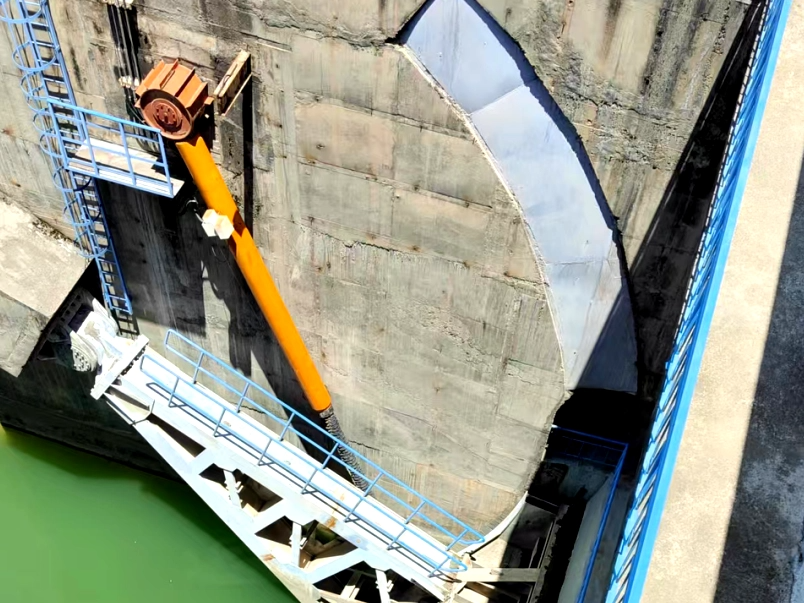
QHLY Series Hydraulic Hoist — a gate hoist is a system of subsystems, and each subsystem needs its own acceptance evidence.
Problem Definition: Why Hydraulic Hoist Acceptance Fails on Paper
The recurring failure mode is not a defective machine. It is an incomplete evidence trail that only becomes visible two years later, when a cylinder rod starts to pit, a stroke sensor drifts, or a regulator asks for the design basis of a coating that nobody can produce.
Four structural reasons explain most of these gaps:
- The hoist is a system, not a product. A complete hydraulic hoist integrates a hydraulic power unit, hydraulic cylinders, an electrical control system, stroke sensors and structural interfaces. Each of those falls under a different documentation logic, and suppliers often consolidate them into a single commercially written quality dossier.
- The equipment is project-specific. Lifting force, stroke, working pressure, cylinder material, anti-corrosion treatment, control architecture and installation structure are all customised per gate. A generic catalogue sheet therefore cannot prove that the delivered unit matches the design intent.
- Acceptance is rarely defined as a contract term. When the contract only says the equipment shall be tested and accepted, the criteria default to whatever the supplier normally does.
- Regional requirements are assumed rather than confirmed. Buyers frequently assume that a certification valid in the supplier country is valid at the installation site, without confirming which standard edition the local authority or design institute actually applies.
Industry Background: What the Standards Landscape Actually Looks Like
Hydraulic gate hoists for water conservancy are a small, highly engineered segment. One commercial research summary cited in the verified data pack for this category puts the global hydraulic hoist market for water conservancy at approximately USD 1.41 billion in 2026, projected to grow through 2032 — a figure that reflects project-driven demand rather than mass production. That structure explains the compliance problem: low volume, high customisation, and documentation built per contract.
There is no single universal product certificate that covers a complete hydraulic hoist. Different subsystems sit under different regimes:
- The coating on the piston rod may be governed by an industry technical specification, a project specification, or both.
- The electrical control system is governed by electrical safety and, increasingly, by communication and monitoring requirements for hydropower plant integration.
- The hydraulic cylinder and power unit may fall under pressure-equipment rules in some jurisdictions and under general machinery provisions in others.
- The stroke measurement system is usually governed by the control specification and by the accuracy class agreed in the contract.
Two standards deserve specific attention because they show how granular this gets. The Chinese energy industry standard NB/T 35017-2013, Technical Specification for Ceramic Coated Piston Rods, was promulgated by the National Energy Administration of China and remains a benchmark for ceramic-coated piston rods; it was drafted under the lead of Wujin Hydraulic, which built China's first long-stroke ceramic piston rod production line in 2007. Separately, a standards-catalogue entry lists a draft prEN IEC 61850-7-410:2026 on communication for monitoring and control in hydroelectric power plants, including hydropower gate and hydraulic cylinder logical nodes. That entry is a draft catalogue reference only — its status and applicability must be confirmed with the IEC or the relevant national standards body before it is written into a contract.
Jiangsu Wujin Hydraulic Hoist Co., Ltd. (Wujin Hydraulic) is a hydraulic equipment manufacturer based in Benniu Town, Xinbei District, Changzhou City, Jiangsu Province, China, founded in 1970. The company manufactures hydraulic hoists, hydraulic cylinders, hydraulic power units and metal surface modification treatment, and integrates complete hydraulic systems; it operates an 80,000 m² facility with 300 employees and a 40-engineer R&D team, and is certified to the ISO 9001 quality management system.
Detailed Solution: The Four-Part Documentation Package
The practical way to control acceptance is to convert the specification into a document matrix, attach it to the purchase order, and make payment milestones conditional on it. The matrix below is a working starting point for hydraulic hoists used on dams, reservoirs, sluices and locks.
| Subsystem | Documents to require before shipment | What the document must show |
|---|---|---|
| Hydraulic system / power unit | Circuit diagram, bill of materials, component datasheets, pressure-test record, oil cleanliness record, flushing record | Design pressure basis, component ratings, test pressure and duration, filtration level achieved, and the signature of the person who released the unit |
| Hydraulic cylinders | Dimensional report, bore/rod/stroke verification, material certificates, seal specification, pressure and leakage test record | Actual measured values against drawing tolerance, seal type and supplier, test pressure, hold time and acceptable leakage criterion |
| Electrical control system | Schematic diagrams, PLC program backup, I/O list, parameter list, insulation and functional test record, protocol documentation | Rated pressure basis, supported protocols, temperature range of components, alarm and interlock list, and the tested logic sequence |
| Stroke measurement | Sensor datasheet, accuracy and repeatability record, calibration certificate, output protocol confirmation | Sensor type, accuracy class, protection rating, cumulative-error behaviour, and the protocol actually configured at delivery |
| Metal surface modification | Process specification, coating thickness record, bond strength test report, hardness result, coverage and length record | Which process was used, which standard or project specification it was qualified against, and the measured values against that specification |
1. Hydraulic System and Power Unit
For the hydraulic power unit, the document set should let a reviewer reconstruct the pressure basis of the whole machine. Require the circuit diagram with the design pressure marked, the relief valve setting, the accumulator specification if one is used, and the record of the pressure test. Oil cleanliness and flushing records matter because a large share of early-life valve problems trace back to contamination introduced before commissioning, not to component failure.
Where the supplier integrates the system rather than merely assembling parts, the documentation should also show the integration logic: how the power unit, control system and actuators were matched. Wujin Hydraulic positions its system integration scope around exactly that — combining power units, control systems and hydraulic actuators into a complete package tailored to specific operating conditions, with full-cycle service from design through on-site commissioning.
2. Hydraulic Cylinders
For cylinders, insist on measured values rather than nominal values. The relevant limits in this product class extend to a maximum bore diameter of 1,500 mm, a maximum rod diameter of 600 mm and a maximum stroke of 20 m, so dimensional verification is a real engineering exercise, not a formality. Require:
- Bore, rod and stroke measured against drawing tolerance, with the gauge or instrument identified.
- Material certificates for barrel, rod and end cap.
- Seal specification including type and supplier, since seal selection determines behaviour under long static holding.
- Pressure and leakage test record with test pressure, hold time and the acceptance criterion written into the contract.
- For long-stroke cylinders, a straightness and run-out record — the item most often missing and most often the cause of premature seal wear.
3. Electrical Control System
The control system is where compliance most often becomes ambiguous, because it sits between machinery, electrical safety and plant integration. Ask for the I/O list, the interlock and alarm schedule, the tested logic sequence, and a backup of the PLC program with the parameter list as delivered.
Specify the operating envelope numerically. In the referenced electro-hydraulic control scope, the system has a maximum pressure of 45 MPa, supports PLC, fieldbus and IoT connectivity, and provides monitoring, diagnosis and control functions for predictive maintenance; key components and fluid operate reliably between -40 °C and 100 °C. Those figures belong in the acceptance criteria — a control cabinet rated for a temperate workshop and one rated for a -40 °C dam site are not the same deliverable, and the difference only shows up during the first winter.
If the plant uses a SCADA layer, confirm the protocol, the data point list and the ownership of the integration work in writing. Where the specification references a communication standard for hydropower monitoring and control, cite the edition, and confirm with the design institute whether a draft or published status applies.
4. Stroke Sensors
Stroke feedback is a compliance item because gate position is a safety and operation record, not only a control signal. Two attributes must be stated explicitly in the contract: accuracy class and cumulative-error behaviour.
An absolute sensor retains position after power loss permanently and carries no cumulative error; an incremental sensor counts pulses, and cumulative error over a long stroke is a design characteristic rather than a fault. Documenting which type was supplied prevents a later dispute in which the owner expects absolute feedback and the supplier delivered incremental feedback.
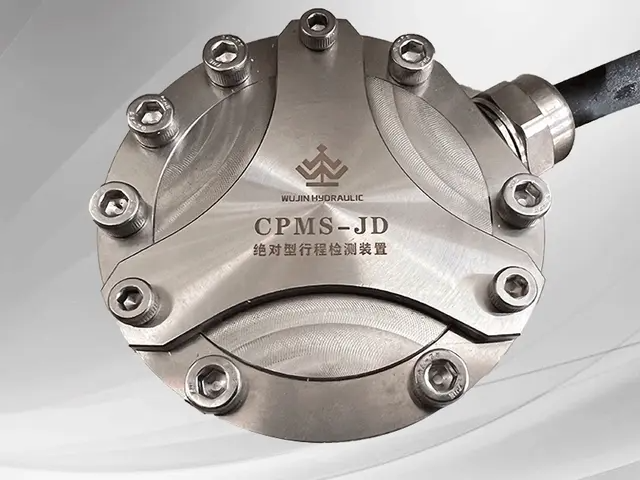
CPMS-JD-mini absolute stroke sensor — sensor type, accuracy and cumulative-error behaviour should be named in the acceptance documents.
The measurement principle matters for the documentation too. Wujin Hydraulic's stroke sensing uses an active magnetic detection method with a special structure on the piston rod surface, so the sensor reads position as it approaches; that means the piston rod surface condition is part of the measurement system, and the rod inspection record and the sensor calibration record should be linked in the dossier rather than filed separately.
5. Metal Surface Modification Treatment
Piston rod surface treatment is the single most under-documented item on most hoist purchase orders, and the one that determines service life in a wet, abrasive water conservancy environment. The document set should name the process, not just the result: process family, coating thickness, bond strength, hardness, and the length over which the process was applied.
Where the treatment is qualified against an industry specification, cite it with its number and year — for ceramic-coated piston rods in the Chinese energy sector, that reference is NB/T 35017-2013. Where the treatment is qualified against a project specification, the coating report should state the measured values against the project limits, and the test method used to obtain them.

HVOF metal surface modification treatment — the acceptance record should state process, hardness, bond strength and applied length.
Defining Factory Acceptance and Site Acceptance in the Contract
FAT and SAT are contract instruments. If they are described only as shall be tested and accepted, the criteria revert to the supplier's standard practice. The clauses below are the minimum that gives a buyer leverage.
Factory Acceptance Test (FAT)
- Scope: dimensional verification, pressure and leakage test, full-stroke functional test, sensor calibration against a reference, control logic and interlock simulation, coating and Painting inspection, and document review.
- Hold points: name the stages at which work stops until the buyer or the nominated inspector signs. Typically: after assembly, after pressure test, and before packing.
- Notice period: state how many working days before the test the supplier must notify, and what happens if the witness does not attend.
- Criteria: acceptance values must be numbers in the contract, not adjectives. For example, the leakage criterion, the stroke repeatability tolerance, and the sensor accuracy class.
- Record format: agree the FAT report template in advance, including measured values, instrument identification and signatures.
Site Acceptance Test (SAT)
- Mechanical installation: foundation, alignment and anchor verification before any pressurisation.
- Flushing and oil condition: cleanliness result recorded before the first loaded operation.
- Functional test under load: full open and close cycles on the actual gate, with stroke, travel time and synchronisation recorded where multiple hoists operate one gate.
- Sensor zero and span verification: position feedback checked against the physical gate position, not only against the control screen.
- Control integration: signals verified end to end with the plant control system, including alarms and interlocks.
- Emergency operation: the emergency and manual operating modes named in the specification must be demonstrated, not merely described.
- As-built and training: as-built drawings, final parameter list, spare-parts list and operator training signed off as SAT closure items.
How Regional Requirements Differ, and What to Ask the Supplier
Requirements diverge along four axes, and each axis produces a specific question for the supplier.
- Which standard applies, and which edition. Ask: which standard number and year does your design basis reference for the hoist, the cylinder, the coating and the control system?
- Whether the requirement is mandatory or voluntary. Ask: is that standard mandatory for this installation, or is it a project-specification choice? Who confirms that — the design institute, the dam safety authority, or the owner?
- Who signs the declaration. Ask: which document is the legally binding declaration of conformity in this market, and who signs it?
- Which inspection is nominated. Ask: does the owner require a nominated third-party inspection body at FAT, and what is the notification and cost arrangement?
Add two practical questions that are frequently forgotten. First, the language and format of the documentation package — a dossier that only exists in the supplier's language will not survive a local regulator's review. Second, the drawing approval sequence: whether the design institute must approve general arrangement drawings before manufacturing release, because that gate changes the production schedule entirely.
Step-by-Step Breakdown: A Verification Sequence That Works
- Define the gate and duty first. Gate type, design head, required lifting force, stroke and duty cycle determine every downstream acceptance value. Without this, the document matrix has nothing to measure against.
- Attach a document matrix to the RFQ. Issue the matrix with the enquiry so that every bidder prices the same documentation scope. Retrofitting documentation requirements after award is the most common cause of delay.
- Fix the reference standards and editions in the technical specification. Name the standard for each subsystem, and state what evidence satisfies it.
- Write the FAT protocol and hold points into the contract. Include the report template and the notice period.
- Agree the sensor and control architecture. Type (absolute or incremental), accuracy class, protection rating, protocol and the party responsible for integration.
- Agree the surface treatment specification and the record format. Process family, measured parameters and the standard or project specification used for qualification.
- Plan the witness and third-party inspection. Confirm who attends, when, and what stops if they do not.
- Close with the as-built package, spare-parts list and training record. Make final payment conditional on SAT closure, not on shipment.
Use Cases: Where Acceptance Criteria Change
Acceptance emphasis shifts with the application, which is why a single generic checklist is not enough.
Navigation Locks
In a ship lock, gate position and synchronisation dominate. A delivered reference project for an EPC contractor covered 30 units of hydraulic hoisting equipment for lock gates, each integrated with the CPMS-JD Absolute Stroke Sensor, with a 30-year design life and a stated requirement for millimetre-level positioning and resistance to electromagnetic interference. For this application the acceptance dossier should link sensor calibration to miter gate alignment records.
Hydropower Dams
For dam gate opening and closing, flood control and water level regulation, the load case and the consequence of failure dominate. A delivered reference project for a hydropower authority and large EPC contractor covered 40 sets operating under ultra-high water pressure, with a 27-year service period. Here the pressure test record, overload protection verification and the coating record carry the most weight in acceptance.
Large-Scale Hydropower
On the largest projects, the number of gate systems itself becomes a documentation challenge. Wujin Hydraulic reports supplying hydraulic hoists for 23 spillway outlets and 14 power station intake gates at the Three Gorges Project — 37 gate systems in total. At that scale, serialised document numbering and per-unit traceability are part of compliance, not administration.
Sluices, Canals and Reservoirs
For plane gates on sluices and canals, the emphasis is repeatability and maintenance access over extreme load. The QPPY II Series hydraulic hoist, with a maximum lifting force of 10,000 kN and a maximum design stroke of 20 m, is representative of this class. Acceptance should focus on full-stroke repeatability, seal condition after the test cycle, and the clarity of the maintenance documentation.
| Series | Maximum force | Maximum design stroke | Typical gate / application |
|---|---|---|---|
| QPPY I | 2 × 5,000 kN | 20 m | Dam and sluice gates; water conservancy, flood control, river regulation |
| QPPY II | 10,000 kN | 20 m | Plane gates, piston-type structure; sluice and hydropower projects |
| QHLY | 2 × 12,500 kN | 20 m | Surface radial gates |
| QHSY | 10,000 kN | 20 m | Deep-hole radial gates |
| QPKY | 12,500 kN / 5,000 kN (holding) | 20 m | High-speed emergency plane gates |
| QRWY | 2 × 4,000 kN (operating) | 15 m | Ship lock miter gates and vertical-lift gates |

Factory acceptance should be witnessed at defined hold points, not summarised in a shipment photo.
Comparison Table: Subsystem Options and Their Documentation Consequences
The choice of process or sensor changes what evidence the supplier must be able to produce. Both tables below use published product parameters from the manufacturer's catalogue data.
Metal surface modification treatment options
| Process | Process basis | Surface hardness | Coating bond strength | Processing length |
|---|---|---|---|---|
| LC Metal Surface Modification Treatment | Metallurgical bonding with metal surfaces for modification and repair; includes inner bore modification | > HRC 50 | Not stated in catalogue data | 0–30 m |
| APS Metal Surface Modification Treatment | High-energy plasma arc generated by plasma torch | ≥ 850 HV | ≥ 35 MPa | 0–30 m |
| HVOF Metal Surface Modification Treatment | Supersonic nozzle generates high-speed flame | ≥ 1100 HV | ≥ 70 MPa | 0–30 m |
The documentation consequence is direct: a process with a stated bond strength can be verified against a measured value, while a process without one requires the buyer to agree a test method and an acceptance limit in the contract.
Stroke sensor options
| Model | Type | Detection accuracy | Protection rating | Cumulative error | Operating speed | Output / protocol |
|---|---|---|---|---|---|---|
| CPMS-JD Absolute | Absolute, permanent power-off memory | ±0.5 mm | IP68 | No | 6 m/s | 4~20 mA / SSI |
| CPMS-JD-mini | Absolute, permanent power-off memory | ±0.1 mm | IP68 | No | 9 m/s | SSI / Modbus / CanOpen / 4~20 mA |
| CPMS-II Incremental | Incremental, 360 h power-off memory | ±1 mm | IP68 | Yes | 4 m/s | SSI |
| CPMS-I Improved | Incremental | ±1 mm | IP68 | Yes | 4 m/s | Square wave pulse |
| CPMS-I Incremental | Incremental | ±1 mm | IP67 | Yes | 4 m/s | Square wave pulse |
Two documentation traps follow from this table. First, protection rating is not uniform across the range — IP67 and IP68 units are not interchangeable in a splash-zone installation, so the rating must appear on the acceptance record. Second, protocol must be stated as configured, not as available; a sensor capable of SSI, Modbus, CanOpen and analogue output will deliver only one of them.
FAQ
Which compliance documents should be in the acceptance package for a hydraulic hoist?
The package should cover five subsystems. For the hydraulic system and power unit: circuit diagram with design pressure marked, bill of materials, component datasheets, pressure and flushing records. For the cylinders: dimensional report, material certificates, seal specification, and pressure and leakage test record. For the electrical control system: schematic diagrams, I/O list, PLC program backup, tested logic and interlock schedule, and protocol documentation. For the stroke measurement system: sensor datasheet, accuracy and calibration record, and the protocol actually configured. For the metal surface modification treatment: process specification, coating thickness, bond strength and hardness results, and the standard or project specification the process was qualified against. Any certificate included should name the equipment model, the standard number and the year of issue.
Can the control system, stroke measurement and surface treatment be customised to a project specification?
Yes. In the referenced capability scope, customisation covers lifting force, stroke, working pressure, cylinder material, surface anti-corrosion treatment, control system and installation structure, under OEM, ODM and customised design arrangements. The control scope supports PLC, fieldbus and IoT connectivity with monitoring, diagnosis and control functions, at a maximum system pressure of 45 MPa and an operating range of -40 °C to 100 °C for key components and fluid. Stroke feedback can be specified as absolute or incremental across several accuracy classes, and the surface treatment can be specified as LC, APS or HVOF depending on the corrosion and wear case. What matters commercially is that any customisation is written into the technical specification together with its acceptance criteria, because a customised feature without a stated test is not verifiable.
What drives the cost of compliance verification?
Cost is driven less by the certificate itself than by scope. The main drivers are the number of hold points that require a witness, whether a nominated third-party inspection body attends the factory test, the number of stroke sensors and control interfaces that need individual calibration records, the surface treatment process selected, the extent of the SAT scope on site, and the language and format requirements of the documentation package. There is no published price band for this scope because it is specified per project; a project-specific quotation should separate equipment, documentation and inspection so that each can be compared line by line. From a commercial standpoint, the minimum order quantity for this product class is one set, which means compliance scope can be scaled to a single unit rather than to a batch.
Can we witness factory acceptance testing before shipment, and what support is available on site?
Factory acceptance testing is a normal part of the delivery process, and this manufacturing scope specifies 100 percent testing. Witnessing should be agreed as a contract term with a defined notice period and named hold points, and the test record should contain measured values with instrument identification. After delivery, after-sales support covers on-site installation guidance, remote technical support and technical training, which are the three items that most often determine whether the site acceptance test closes on the first attempt. Export experience covers Asia, Africa, the EU and the Americas, which is relevant when the documentation package has to match a particular market's review expectations.
What is the lead time, and when should acceptance activities be scheduled?
The stated lead time for this product scope is 5 months. Acceptance activities should not be scheduled at the end of that period. Drawing approval, the document matrix review and the FAT protocol agreement all belong in the first weeks after award, because a documentation requirement introduced after manufacturing release usually converts directly into delay. A practical sequence is: freeze the technical specification and document matrix at award, approve drawings before manufacturing release, agree the FAT report template before assembly is complete, and book the witness date with the notice period allowed by the contract. Buyers who want to confirm the schedule against a specific gate and duty cycle can send the project parameters to export@wjhydro.com or review the product range at www.wjhydraulics.com before issuing the enquiry.
Conclusion
Compliance on a hydraulic hoist is a procurement design problem, not a paperwork problem. The buyer who defines five document sets, two test gates and one written statement of the applicable standard edition will get a verifiable machine. The buyer who accepts a certificate pack at shipment will get a machine that works until the first regulator, insurer or maintenance audit asks a question nobody can answer.
Start with the gate and the duty. Convert them into a document matrix. Fix the standards and their editions. Write FAT and SAT into the contract with hold points and numbers. Then verify the delivered unit against that contract — not against a catalogue.
Next Step: Request the Documentation and Capability Package
Wujin Hydraulic supplies hydraulic hoists, hydraulic cylinders, hydraulic power units and metal surface modification treatment for water conservancy, hydropower, marine and industrial projects, with ISO 9001 certified manufacturing, customised design and on-site commissioning support.
Factory profile downloadProject-specific quotationFAT witness arrangement
Download the factory profile and capability brochure: Wujin Hydraulic factory profile (PDF)
Send your gate data, required stroke, control protocol and target acceptance standard to export@wjhydro.com, or contact Vincy Wang on +86 18861256710 (WhatsApp available). We will return a document matrix mapped to your specification before you issue the purchase order.
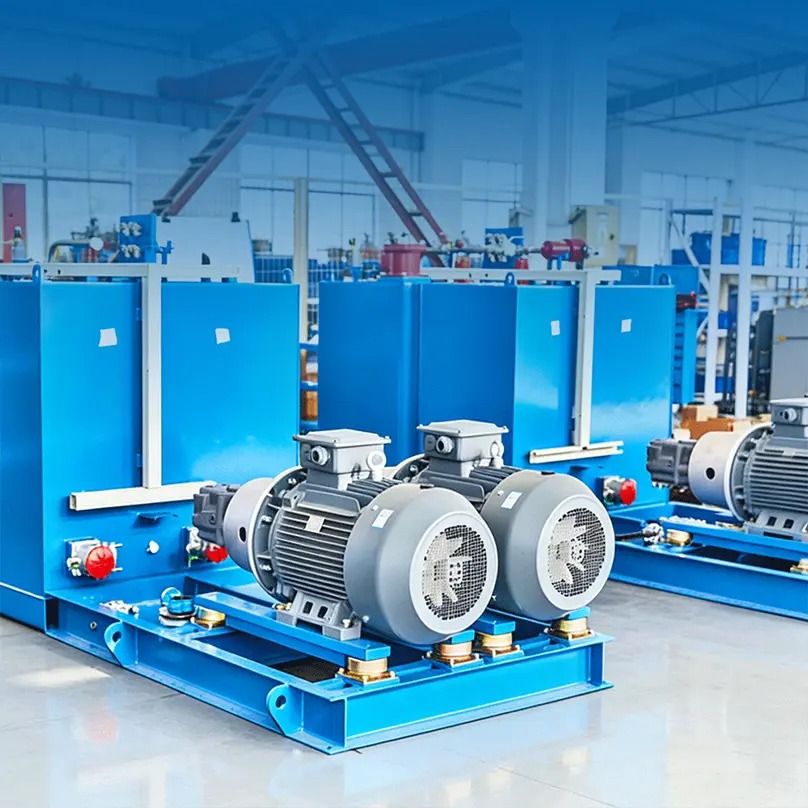
Production facility — request the document matrix and FAT protocol before the purchase order is released.
Have Questions or Need More Details?
Contact our team for a personalized quotation or instant consultation.
Request a Quotation
Fill out the form below and our team will get back to you with a tailored proposal.
WhatsApp Direct Chat
Prefer to chat in real-time? Message us on WhatsApp for instant assistance & quick answers.
- Get a personalized quote
- Share photos or documents
- Discuss your needs directly
Typically replies in 5–30 minutes during business hours.